
Blog
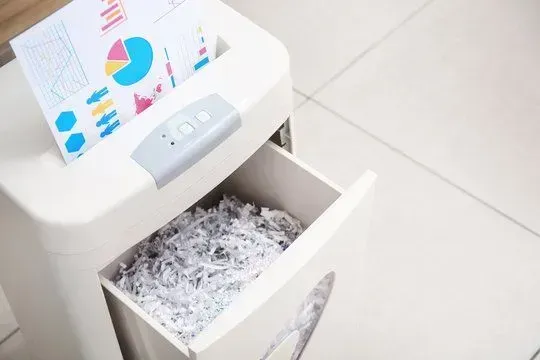
How Much Can Businesses Save With Scheduled Shredding Services
Introduction
Most businesses handle document destruction reactively. A box fills up, a cabinet overflows, or an audit deadline approaches. Someone is told to “take care of it,” and shredding becomes a chore squeezed between real work.
That reactive pattern is expensive. It turns data protection into a disruption—stealing time, breaking focus, and allowing sensitive material to pile up in the meantime.
Scheduled shredding changes the entire workflow. Instead of waiting for problems, businesses build destruction into daily operations. The result is not just better organization—it is measurable cost savings over time.
How Scheduled Shredding Fits Into Daily Operations
Scheduled shredding replaces ad-hoc cleanup with a fixed system.
Locked containers are placed inside the workplace. Staff drop sensitive documents into them as part of routine work. On a set schedule—weekly, biweekly, or monthly—the containers are emptied and destroyed by a professional provider.
This approach removes several recurring burdens:
Manual shredding sessions
Storage of sensitive paper
Emergency purge requests
Staff time feeding machines
Inconsistent handling habits
Destruction becomes infrastructure rather than a task. No one has to “remember” to shred. It simply happens.
Where the Financial Savings Come From
The savings from scheduled shredding do not come from a lower price per page. They come from removing hidden operational costs.
Those savings appear in three areas:
Labor
Workflow disruption
Risk exposure
Each one compounds over time.
Labor Cost Reduction
DIY shredding converts paid work hours into non-productive time. Every minute spent feeding a machine is time not spent on revenue, service, or operations.
A standard office shredder processes a banker box in roughly 30–45 minutes. If an employee earns $18 per hour, that box costs $9–$13 in labor alone.
In a business producing:
Four boxes per month → $36–$52 in labor
Eight boxes per month → $72–$104 in labor
Twelve boxes per month → $108–$156 in labor
Scheduled service for a small office typically costs $40–$70 per month. The labor savings alone often exceed the service fee.
Workflow and Productivity Gains
Shredding interrupts work. It is noisy, repetitive, and mentally disengaging. Staff delay it, rush it, or avoid it.
That friction creates:
Backlogs of sensitive material
Lost time switching tasks
Inconsistent handling
Stress during audits
Scheduled shredding eliminates these interruptions. Disposal becomes passive. Staff continue working while destruction happens externally.
The productivity gain is not just minutes—it is continuity.
Risk Reduction as Financial Protection
Security failures are not theoretical. Lost documents, unshredded files, and improperly discarded records create real exposure.
The financial impact of a single failure can include:
Regulatory penalties
Legal liability
Client trust loss
Brand damage
Recovery costs
Scheduled shredding replaces human memory with process. Locked bins prevent access. Destruction is documented. Risk is engineered out of daily operations.
That protection has monetary value even when no incident occurs.
One-Time Shredding vs Ongoing Service
Many businesses rely on purge-style shredding. They wait until boxes accumulate and then call for service.
That approach creates three inefficiencies:
Higher per-box cost
Emergency scheduling fees
Long-term storage of sensitive material
Scheduled service distributes cost evenly and prevents buildup. Instead of paying $150–$250 several times a year, businesses often pay $40–$70 per month and eliminate purges entirely.
Over a year, the scheduled model is typically cheaper and far more stable.
A Simple Savings Comparison
Consider a small office generating six boxes per month.
Under a DIY model:
Six boxes × 30 minutes = three hours
Three hours × $18/hour = $54 in labor
Equipment wear and replacement not included
Under a scheduled model:
Monthly service = $50–$60
Internal labor = $0
No equipment required
Even before considering risk and disruption, the scheduled model matches or beats DIY cost. As volume increases, the savings grow.
When Scheduled Shredding Becomes the Better Choice
Scheduled service becomes financially superior when:
Shredding happens weekly
More than one person generates records
Compliance requirements apply
Storage space is limited
Staff avoid the task
At that point, the business is already paying—just not in a visible line item.
FAQs About Scheduled Shredding Savings
Businesses often hesitate because they are unsure how savings actually show up. These are the most common questions that come up when comparing scheduled shredding to manual or purge-based methods.
Is scheduled shredding only for large companies?
No. Small offices often benefit the most because staff time is limited and shredding interrupts core work. Even a single-bin service can replace hours of labor each month.
Does scheduled service really cost less than one-time purges?
Over a year, yes. Purge jobs often cost $150–$250 per visit. Two or three of those per year usually exceed the cost of steady monthly service.
What if my business only produces a little paper?
If shredding happens monthly or more, scheduled service usually becomes cost-neutral or cheaper once labor is considered. Very low-volume offices may still prefer occasional service.
Can scheduled shredding replace in-house shredders?
Yes. Many businesses remove office shredders entirely once bins are installed, eliminating equipment costs and staff responsibility.
Is the savings mostly about money or time?
Both. The financial savings come from eliminating paid labor and emergency services, while the time savings come from uninterrupted workflow and reduced stress during audits.
Conclusion
Scheduled shredding does not save money by cutting corners. It saves money by removing friction.
Instead of paying in staff time, interrupted workflows, emergency cleanups, and compliance risk, businesses pay a predictable monthly fee and eliminate an entire internal process.
For organizations that generate sensitive documents every week, scheduled shredding is not a convenience upgrade. It is an operational cost-reduction strategy. Certified Shred Inc. helps Utah businesses replace reactive destruction with secure, scheduled systems that protect data while quietly lowering the real cost of handling it.

Contact Information
Phone: 801-972-4748
Email: [email protected]
Address: 537 Pickett Circle Suite 600 Salt Lake City UT 84115
Business Hours:
Mon - Thu: 8:00 am-3:00 pm
Friday: 8:00 am - 1:00 pm
Sat - Sun: Closed
Service Areas
© All Rights Reserved • Grease Guys | Terms of Use | Privacy Policy